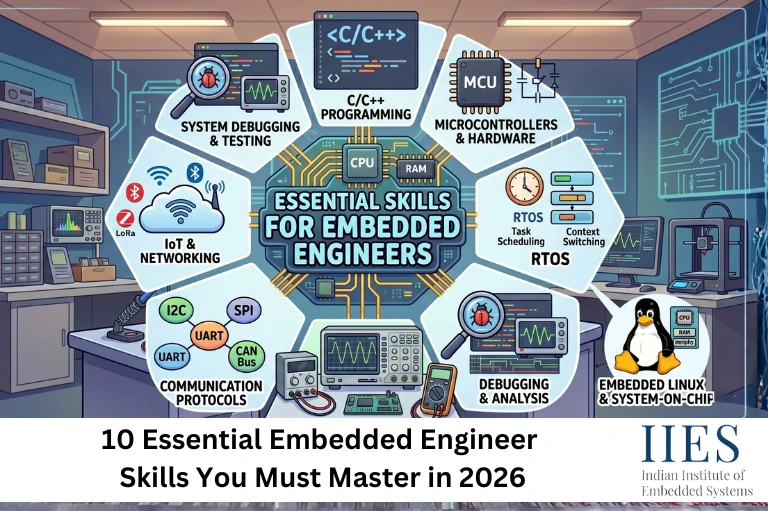
Why Embedded Engineer Skills Matter
The role of an embedded engineer goes beyond coding. It involves designing efficient systems that interact with hardware under strict constraints like memory, power, and timing.
Without strong embedded engineer requirements, systems can fail in critical applications such as automotive safety or medical devices. This makes skill development not just important, but essential.
Responsibilities of an Embedded Engineer
Embedded engineers play a crucial role in the development and implementation of embedded systems. Understanding the roles and responsibilities of embedded engineer helps align your skills with industry expectations.
Hardware and Software Design
Embedded engineers develop both hardware and software components by collaborating with cross-functional teams. Strong embedded hardware engineer skills are required to understand circuit design, microcontrollers, and system architecture.
They must also focus on:
- Hardware-software integration
- Efficient system design
- Power and performance optimization
Firmware Development
Firmware acts as the bridge between hardware and software. Engineers write optimized code using C and C++ while ensuring minimal resource usage.
Key areas include:
- Embedded C/C++ programming
- Low-level system control
- Performance optimization
- Debugging embedded applications
Testing and Verification
Testing ensures reliability and performance. Engineers use advanced tools and firmware debugging techniques to identify and resolve issues.
Common practices include:
- System validation and verification
- Real-time debugging
- Stress and performance testing
Collaboration and Communication
Embedded engineers work closely with developers, hardware teams, and stakeholders. Strong communication ensures project success and smooth execution.
Important Technical Competencies for Embedded Systems Work
To meet modern embedded engineer requirements, a strong technical foundation is essential.
Knowledge of Hardware
Engineers must understand:
- Digital and analog electronics
- Microcontrollers and microprocessors
- FPGA basics
- Embedded circuit design
This knowledge forms the backbone of all embedded systems.
Real-Time Operating Systems (RTOS)
RTOS is critical for managing real-time tasks. Engineers should be familiar with:
- Task scheduling
- Resource management
- Interrupt handling
Popular RTOS platforms include FreeRTOS and RTX.
Communication Protocols
Embedded systems rely on communication between components. Important protocols include:
Understanding these ensures seamless data exchange.
Essential Tools Every Embedded Engineer Uses
Debugging and Testing Tools
Debugging is a core part of embedded development. Engineers must develop strong hardware debugging skills using tools such as:
- JTAG
- Logic analyzers
- Oscilloscopes
These tools help identify both hardware and firmware issues effectively.
To build, test, and optimize embedded systems efficiently, engineers rely on a set of specialized tools. Mastering these tools is part of the core embedded engineer skills required in real-world projects. These tools also help engineers work effectively with the essential components of embedded system, including hardware, firmware, and communication interfaces.
Development Environments (IDE)
Integrated Development Environments (IDEs) help in writing, compiling, and debugging code.
- Keil uVision
- STM32CubeIDE
- MPLAB X
These tools streamline firmware development and improve productivity while working across different embedded platforms.
Simulation Tools
Before deploying on hardware, simulation tools help test system behavior and reduce errors.
- Proteus (circuit simulation)
- Tinkercad (beginner-friendly simulation)
Simulation minimizes hardware dependency during early development stages and allows engineers to validate the essential components of embedded system in a virtual environment.
Version Control Systems
Version control helps manage code changes and collaborate effectively.
Using version control is considered a best practice in modern embedded development workflows.
Real-Time Monitoring Tools
These tools allow engineers to observe system behavior during execution.
- Serial Monitor
- Real-time trace tools
They are useful for performance analysis and debugging real-time systems.
Non-Technical Skills for Embedded Engineers
Technical knowledge alone is not enough. Successful engineers also develop strong soft skills.
Teamwork and Collaboration
Projects involve multiple teams. Clear communication improves efficiency and reduces errors.
Time Management
Meeting deadlines is critical. Engineers must prioritize tasks and manage development cycles effectively.
Attention to Detail
Even small mistakes can lead to system failures. Precision is essential in embedded systems.
Creative Problem-Solving
Engineers must think critically to solve complex real-world problems under constraints.
Fundamental Abilities and Attributes of an Embedded Engineer
Analytical Skills
Engineers must analyze system behavior, identify bottlenecks, and optimize performance.
Adaptability
Technology evolves rapidly. Staying updated with new tools and trends is crucial.
Patience
Debugging embedded systems can be time-consuming. Persistence is key.

Challenges in Embedded Engineering
Despite having strong embedded engineer skills, professionals often face real-world challenges while building reliable systems. Understanding these helps improve problem-solving and prepares engineers for industry demands.
- Debugging hardware issues: Identifying faults at the circuit or signal level requires strong hardware debugging skills and patience.
- Limited memory constraints: Embedded systems operate with restricted memory, making optimization critical.
- Real-time system failures: Timing issues in RTOS-based systems can lead to unpredictable behavior.
- Integration complexity: Ensuring smooth interaction between hardware, firmware, and communication protocols is often challenging.
Practical Example: Embedded System Workflow
Here is a simplified workflow followed in real projects:
Stage | Task |
Design | Define system requirements and architecture |
Development | Write firmware and integrate hardware |
Testing | Perform debugging and validation |
Deployment | Optimize and release product |
This workflow highlights how different embedded engineer responsibilities come together in real-world scenarios.
Enhancing Engineering Skills within the Embedded Systems Domain
Continuous Learning
Stay updated with:
- New microcontrollers
- Emerging protocols
- Industry tools
Personal Projects
Build projects such as:
- Smart home devices
- IoT-based sensors
- Robotics systems
These improve practical understanding.
Professional Courses
Structured learning helps strengthen fundamentals and gain industry-ready skills.
Networking and Mentorship
Connecting with professionals helps gain real-world insights and career guidance.
Future Skills for Embedded Engineers (2026 and Beyond)
Embedded systems are becoming smarter. Engineers must understand how to integrate AI models into devices.
Security
With increasing connectivity, security is critical. Engineers must learn encryption and secure system design.
Internet of Things (IoT)
IoT continues to grow rapidly. Engineers must develop skills in connected device ecosystems.
Wireless Communication
Technologies like Wi-Fi, Bluetooth, and LoRa are essential for modern embedded systems.
Best Practices for Embedded Engineers
- Write efficient and optimized code
- Focus on power and memory constraints
- Use proper debugging tools early
- Document your work clearly
- Test continuously, not just at the end
Common Mistakes to Avoid
- Ignoring hardware constraints
- Poor debugging practices
- Lack of system-level understanding
- Overcomplicating solutions
- Not keeping up with new technologies
Conclusion
Building strong embedded engineer skills requires a balanced combination of technical expertise, problem-solving ability, and continuous learning. From understanding hardware to mastering firmware and debugging techniques, each skill plays a vital role in developing reliable systems.
As industries move toward smarter and connected devices, the demand for skilled engineers will only increase. By focusing on the skills required for embedded systems engineers and staying updated with emerging trends, you can build a successful and future-ready career.